v0.5.1 Latest release, on the road to 1.0
Build reliable LLM applications in Scala, on the JVM you already run
LLM4S is an open-source framework for agents, tool calling, RAG and multi-provider LLM calls, with errors as values, typed schemas and production observability. Community-built and stewarded by the LLM4S Foundation.
LLM4S in numbers
GitHub, as of Oct 2026. Activity is also tracked on LFX Insights. See LLM4S on LFX Insights.
Why LLM4S
Production AI engineering, the way JVM teams already build software
Most LLM tooling is Python-first. LLM4S brings agents, tools and retrieval to Scala and the JVM, so they run in the services, data platforms and pipelines you already operate, with no Python sidecar.
-
Result[A]
Errors are values
Every call returns a
Error handlingResultwith typed error classes instead of throwing, so failures from rate limits to bad tool arguments are handled where the compiler can see them. -
derives
Typed tools and structured output
Describe a tool's arguments or a model's answer as a case class and derive its JSON schema with
Derived schemasderives SchemaOf, so the schema, the parser and your code cannot drift apart (Experimental). -
SPI
One API, many providers
Sixteen chat providers, from OpenAI, Anthropic, Gemini and Bedrock to local Ollama, behind one small provider SPI. Adding a provider is adding a dependency; switching is a config change.
Providers -
Agent
Agents built for production
Guardrails, including LLM-as-judge, handoffs between specialist agents, streaming events, human review and durable checkpoints in SQLite or PostgreSQL so a run survives a restart.
Agents -
RAG
Retrieval and memory
Chunking, embeddings, pgvector, Qdrant, SQLite and Elasticsearch stores, hybrid keyword and vector search, reranking, RAG evaluation and agent memory.
RAG and vector stores -
OTel
Observable and governed
OpenTelemetry, Langfuse, Prometheus and Micrometer integrations, cost tracking, API-key redaction, a sandboxed workspace for tools, MCP with auth, and a published threat model.
Observability
Your types are the contract
From a case class to a checked model answer
Write the type once. LLM4S derives the JSON schema the provider enforces, sends it, and reads the answer back into your type, all inside one Result.
- Provider and model come from
application.conf, keys from the environment - No exceptions to catch: a missing key, a refused request or an unreadable answer is a
Left - The same type works as an agent's typed answer or a tool's arguments
1
2
3
4
5
6
7
8
9
10
11
12
13
14
15
16
17
18
19
20
21
22
import org.llm4s.config.Llm4sConfig
import org.llm4s.llmconnect.LLMConnect
import org.llm4s.llmconnect.model.{ Conversation, UserMessage }
import org.llm4s.model.ModelRegistryService
import org.llm4s.schema.*
import org.llm4s.types.Result
import upickle.default.ReadWriter

case class Ticket(
  @description("One-line summary of the problem") title: String,
  @description("low, medium or high") priority: String
) derives SchemaOf, ReadWriter

val ticket: Result[Ticket] = for {
  providerConfig <- Llm4sConfig.defaultProvider()
  registry       <- Llm4sConfig.modelRegistryService()
  given ModelRegistryService = registry
  client <- LLMConnect.getClient(providerConfig)
  ticket <- client.completeStructuredOf[Ticket](
    Conversation(Seq(UserMessage("Checkout fails with a 500")))
  )
} yield ticket
Fits your stack
Works with the JVM ecosystem you already use
Modular artifacts: depend on the core and add only the providers and integrations you need, pinned together by one bill of materials.
Model providers
- OpenAI
- Anthropic
- Azure OpenAI
- Google Gemini
- Vertex AI
- Amazon Bedrock
- IBM watsonx.ai
- Mistral
- Cohere
- DeepSeek
- xAI
- Z.ai
- OpenRouter
- Requesty
- Ollama
- Any OpenAI-compatible endpoint
Languages, frameworks and runtimes
Protocols, stores and operations
- Model Context Protocol
- OpenTelemetry
- Langfuse
- Prometheus
- Micrometer
- PostgreSQL + pgvector
- Qdrant
- SQLite
- Elasticsearch
- Neo4j
- Docker sandbox
Use cases
What teams build with it
Assistants inside JVM services
Support, operations and internal assistants that run in your Spring Boot, Pekko or plain JVM service, with guardrails on what goes in and comes out.
Question answering over your documents
RAG over manuals, tickets and wikis with hybrid search, reranking, permission-aware retrieval and evaluation you can run in CI.
Extraction into typed records
Invoices, emails and forms turned into case classes, checked against a schema, inside your existing data pipelines.
Agentic workflows
Multi-step agents with tools, handoffs and human review, checkpointed so long runs resume after a crash or a deploy.
Developer tooling
Issue triage, coding agents and MCP servers that expose your systems to any MCP-capable client.
Voice and multimodal apps
Speech to text, text to speech, image generation and vision, behind the same typed API.
Showcase
Open-source projects built with LLM4S
Public projects from the LLM4S organisation and the community. Listing is not an endorsement.
-
llm4s/szork
Szork
A voice-controlled, Zork-style text adventure that uses LLM4S for speech, image generation, tools and agentic gameplay.
-
llm4s/rag_in_a_box
RAG in a Box
A turnkey RAG deployment powered by LLM4S, with a REST API for ingestion and querying, PostgreSQL with pgvector, and hybrid search.
-
com-vitthalmirji/toon4s
toon4s
Token-Oriented Object Notation (TOON) for the JVM, a compact encoding for sending structured data to LLMs.
-
gruggiero/Adk4s
Adk4s
An Agentic Development Kit in Scala, built on top of LLM4S.
-
gruggiero/llm4s-tripper
llm4s-tripper
A travel-planning agent built with LLM4S and workflows4s, with cats-effect and MCP tools.
-
pavanvamsi3/triage4s
triage4s
Evidence-backed AI issue triage for Scala projects, powered by LLM4S, with a read-only GitHub dashboard.
Students and early-career engineers
Become an AI engineer in the open, for free
Skip the expensive bootcamp. Learn LLM engineering on a real, production-minded codebase: build agents and RAG pipelines, then contribute code that maintainers review in public. Every merged pull request is part of your public record.
- 1Get startedInstall LLM4S and make your first call
- 2Build an agentTools, guardrails and multi-turn conversations
- 3Add retrievalEmbeddings, vector stores and RAG evaluation
- 4Connect tools and MCPTyped tools and Model Context Protocol servers
- 5ContributeGood first issues, weekly Dev Hour, mentorship
Programs and mentorship
Mentored paths into open source
-
2025
Google Summer of Code
LLM4S took part in GSoC 2025 under the Scala Center umbrella: four funded interns from the United States, Switzerland and India worked on the project.
Meet the 2025 cohort -
2026 tracks
LFX, ESoC and GSoC
The roadmap lists LFX Mentorship 2026, European Summer of Code 2026 and GSoC 2026 as mentorship tracks, each with a public list of project ideas.
See the project ideas -
Every Sunday
LLM4S Dev Hour
A weekly mob-programming session on Discord at 09:00 London time, open to everyone, from first contribution to hundredth.
Join the next session -
Partners
Host an intern
Universities and companies can partner with the foundation to fund or co-mentor internships on LLM4S.
Partner with us
Events
Upcoming events
Meet the LLM4S community at a talk near you, or join the weekly Dev Hour online.
Until next event
0 days0 hours0 minutes
LLMday + Prompt Engineering Conference London Q4 2026
LLM4S 1.0: From Idea to Production AI in Scala/JVM
No talks are scheduled right now.
LLM4S Dev Hour: every Sunday at 09:00 London time on Discord. Next: Sunday, 09:00 London time.
Talks
LLM4S Around the World
Snapshots from LLM4S talks at Scala meetups, conferences, developer events and big-tech hackathons. Select a picture to open it full size.
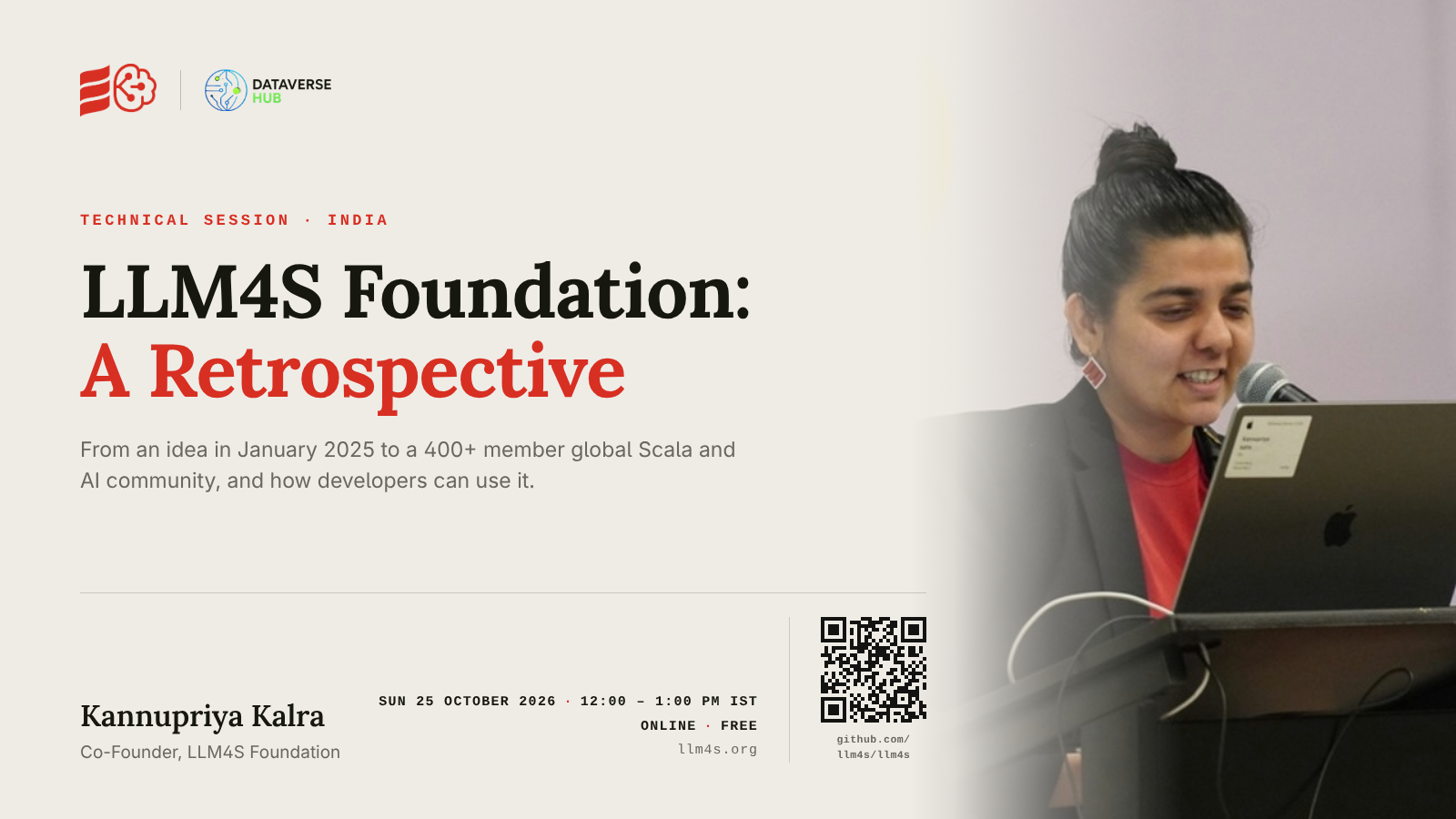 DataverseHub 2026, Hyderabad – LLM4S Foundation: A Retrospective
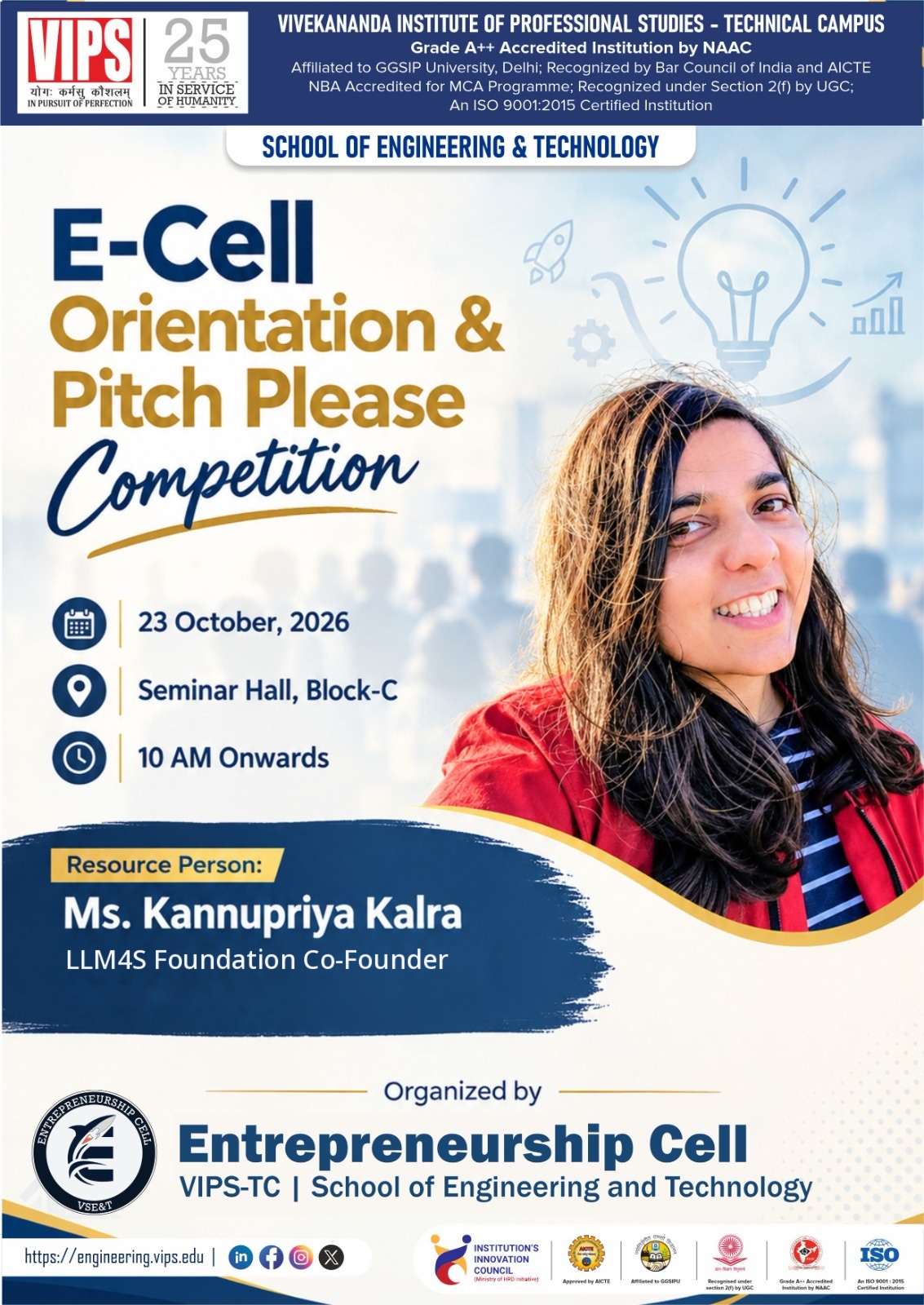 E-Cell Orientation & Pitch Please, VIPS-TC 2026 – poster
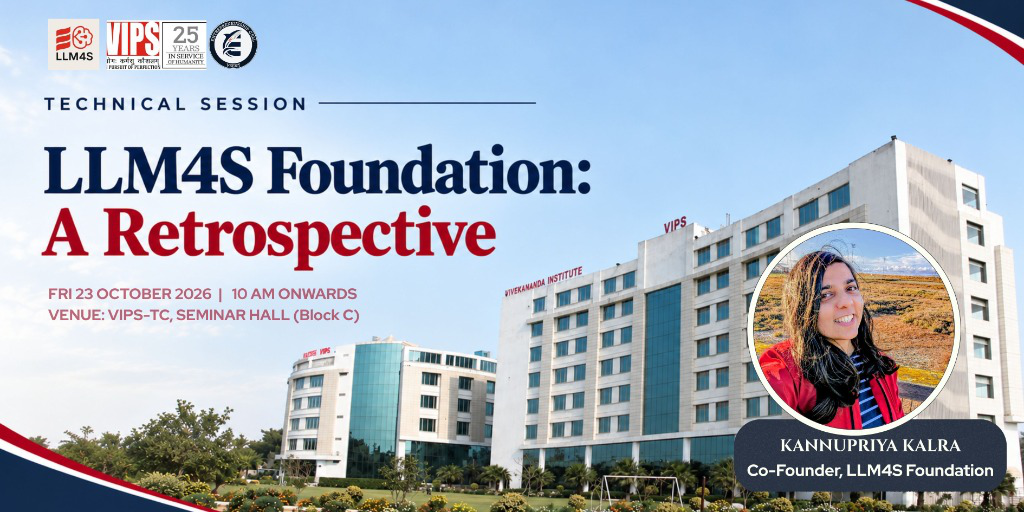 E-Cell Orientation & Pitch Please, VIPS-TC – LLM4S Foundation: A Retrospective
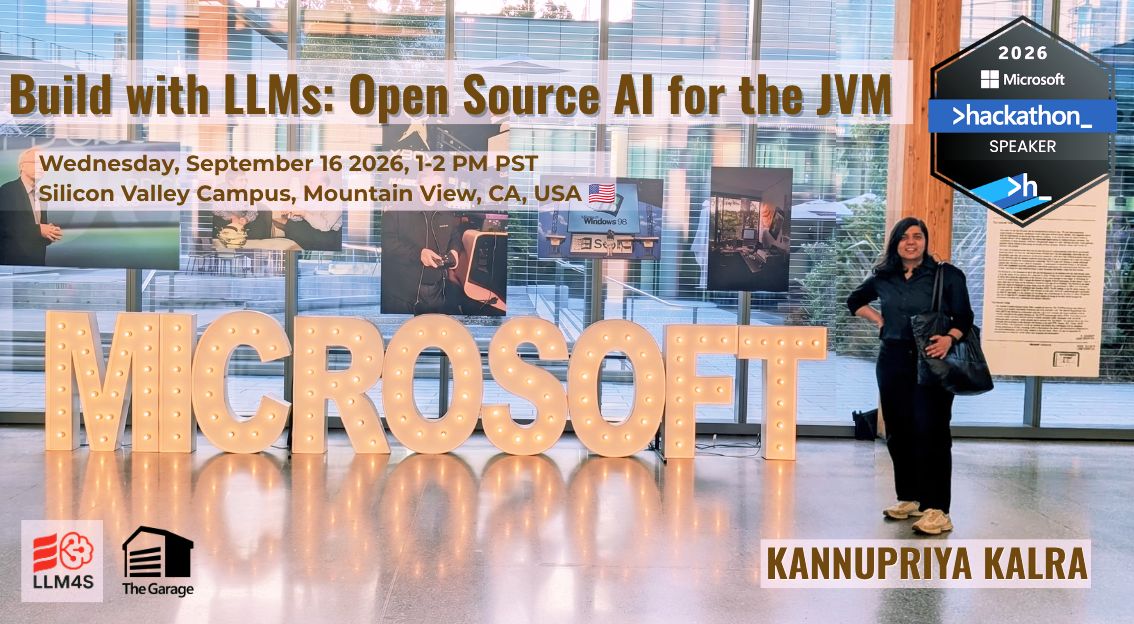 Microsoft Global Hackathon 2026 – Build with LLMs: Open Source AI for the JVM
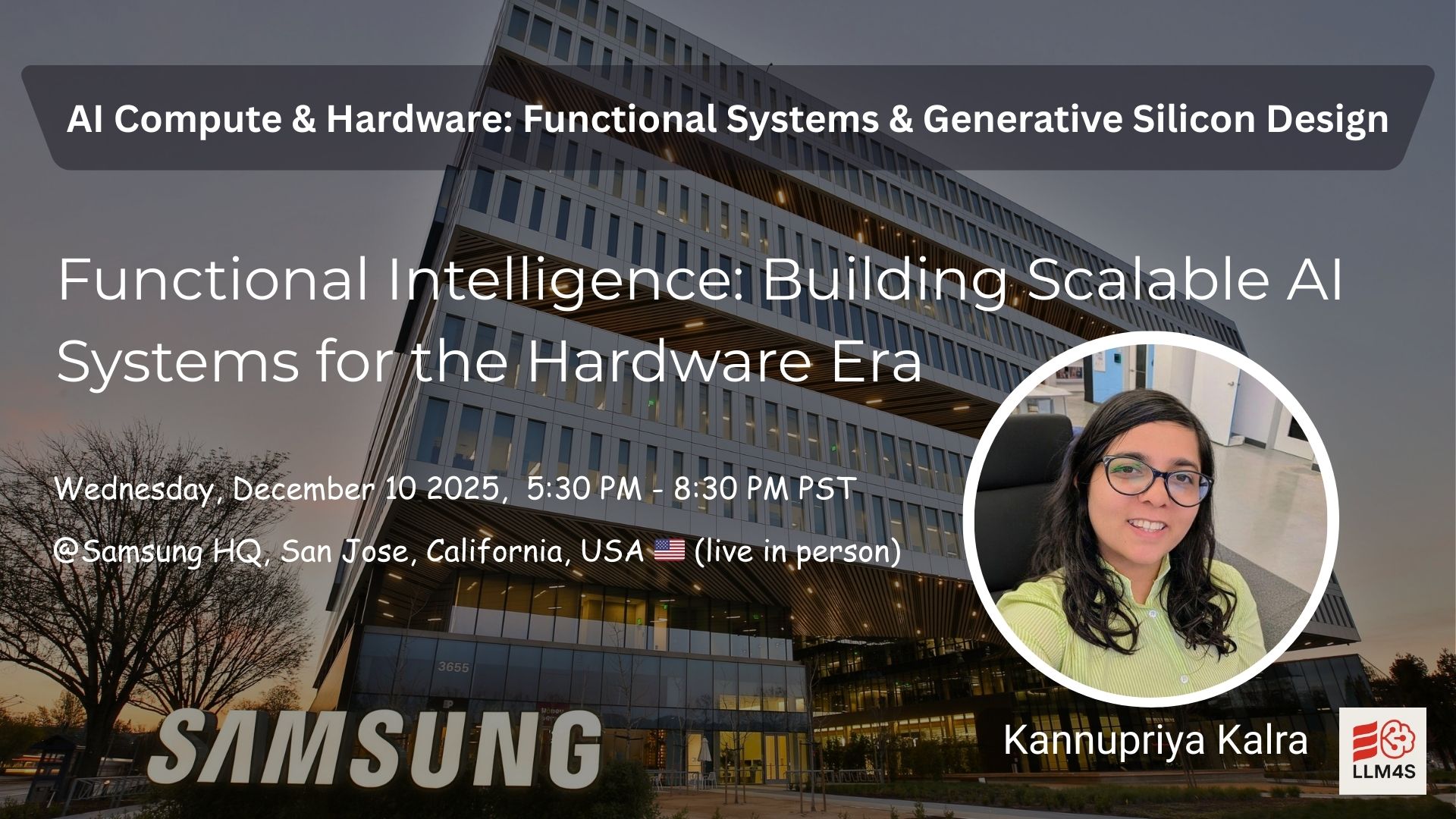 AI Compute & Hardware Conference 2025, San Jose – Functional Intelligence
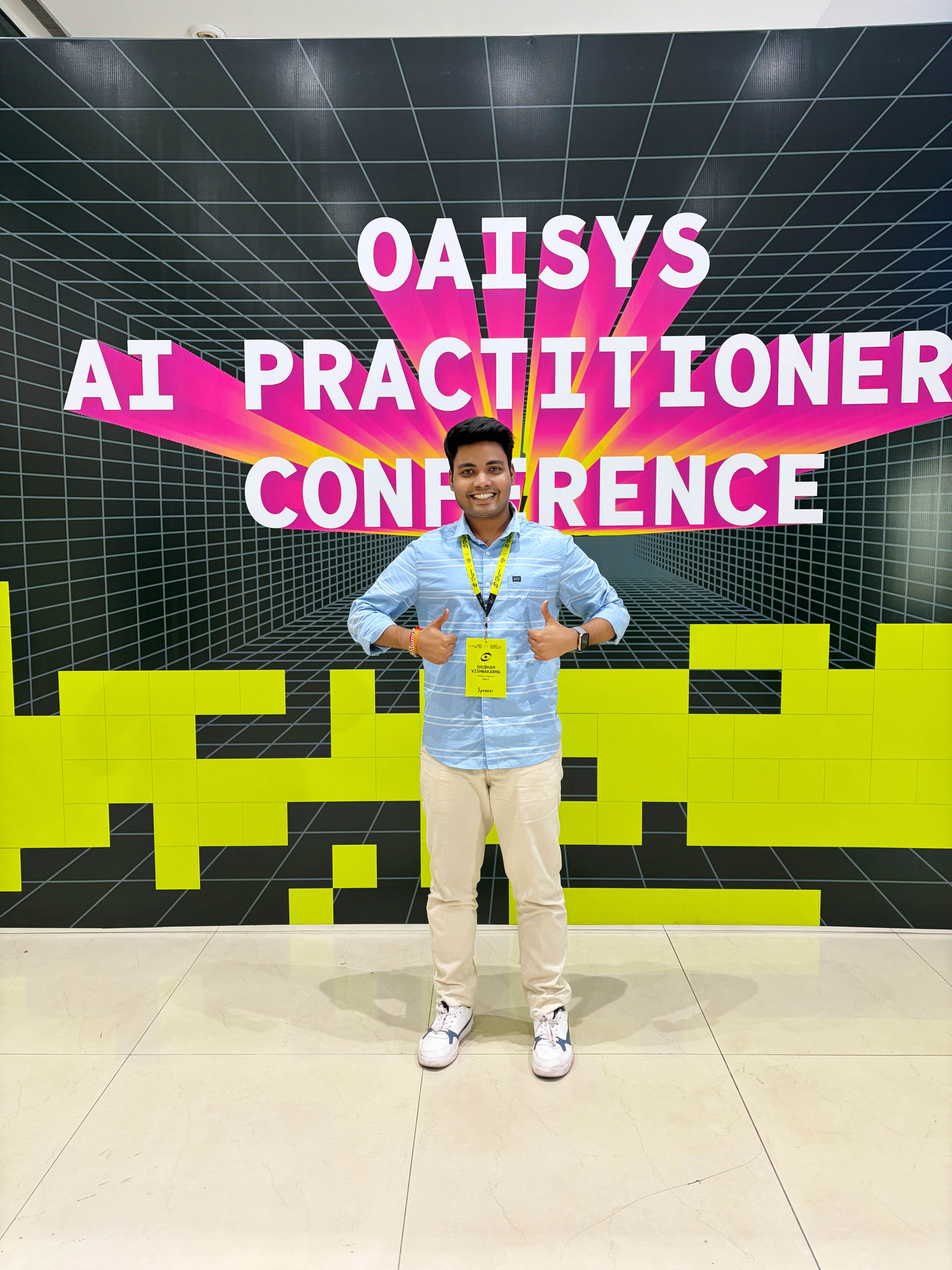 Oaisys AI Practitioners Conference 2025, Pune – Shubham Vishwakarma at the venue
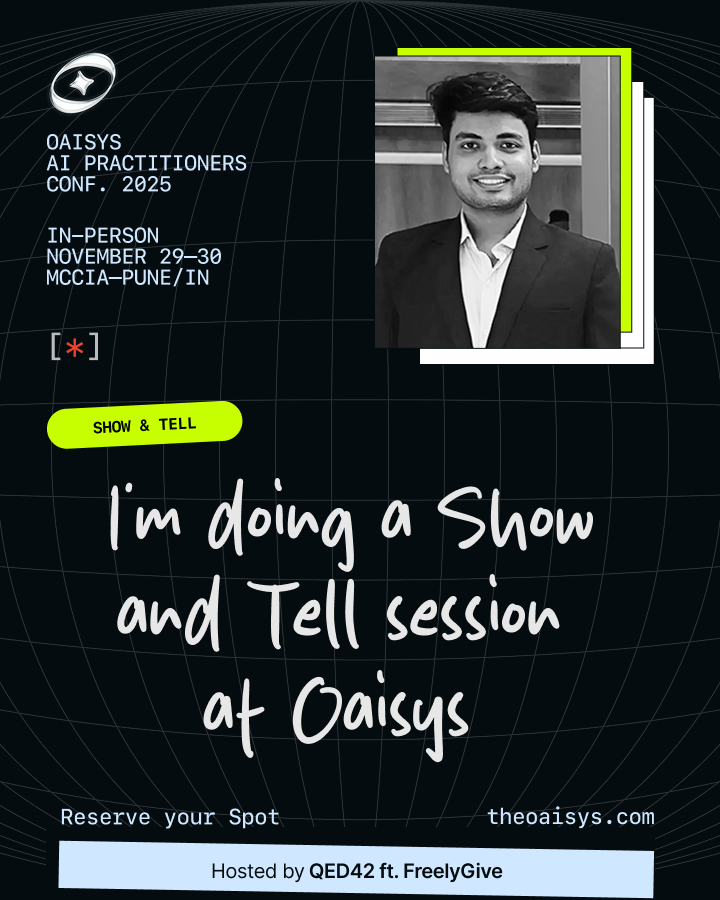 Oaisys AI Practitioners Conference 2025, Pune – Show and Tell, Shubham Vishwakarma
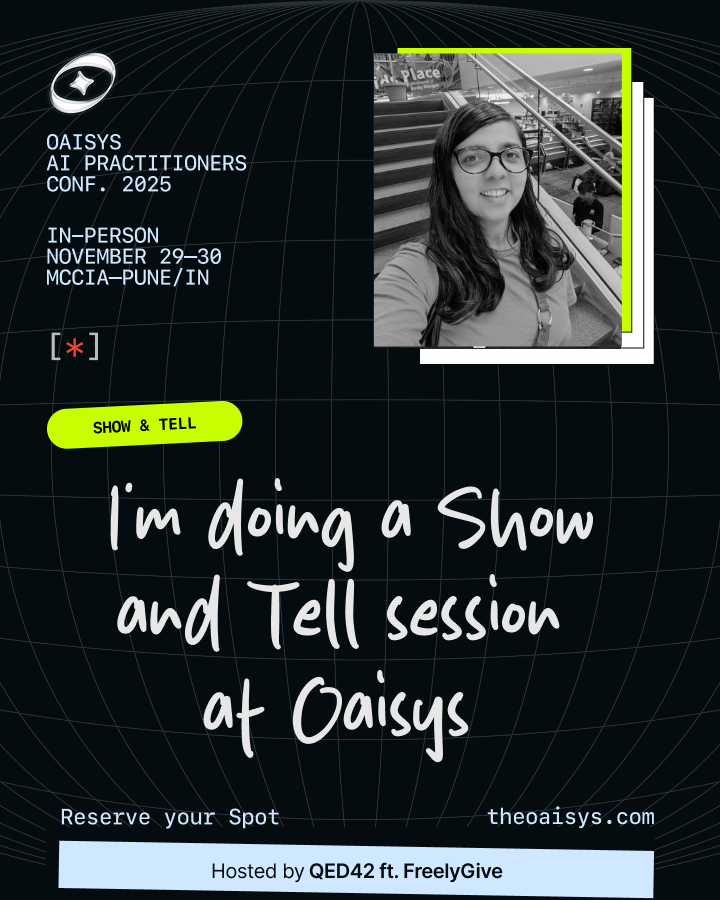 Oaisys AI Practitioners Conference 2025, Pune – Show and Tell, Kannupriya Kalra
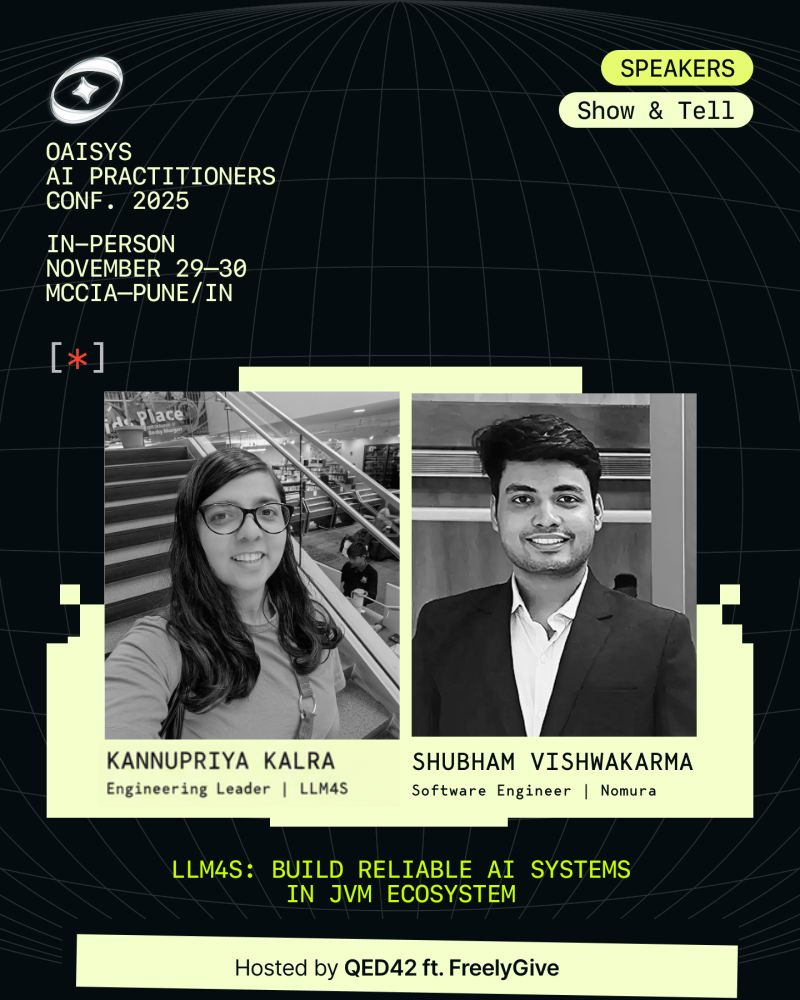 Oaisys AI Practitioners Conference 2025, Pune – LLM4S: Building Reliable AI Systems in the JVM Ecosystem
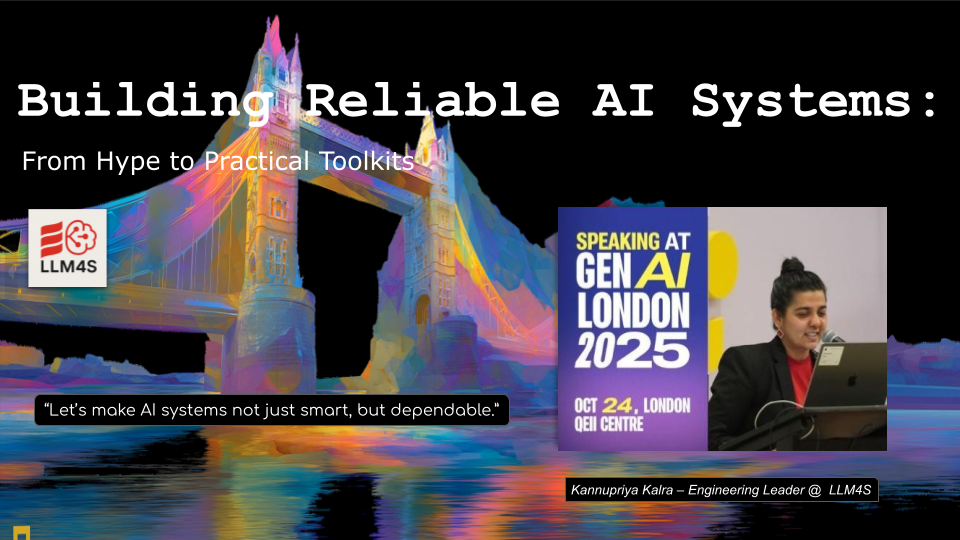 GEN AI London 2025 – Building Reliable AI Systems
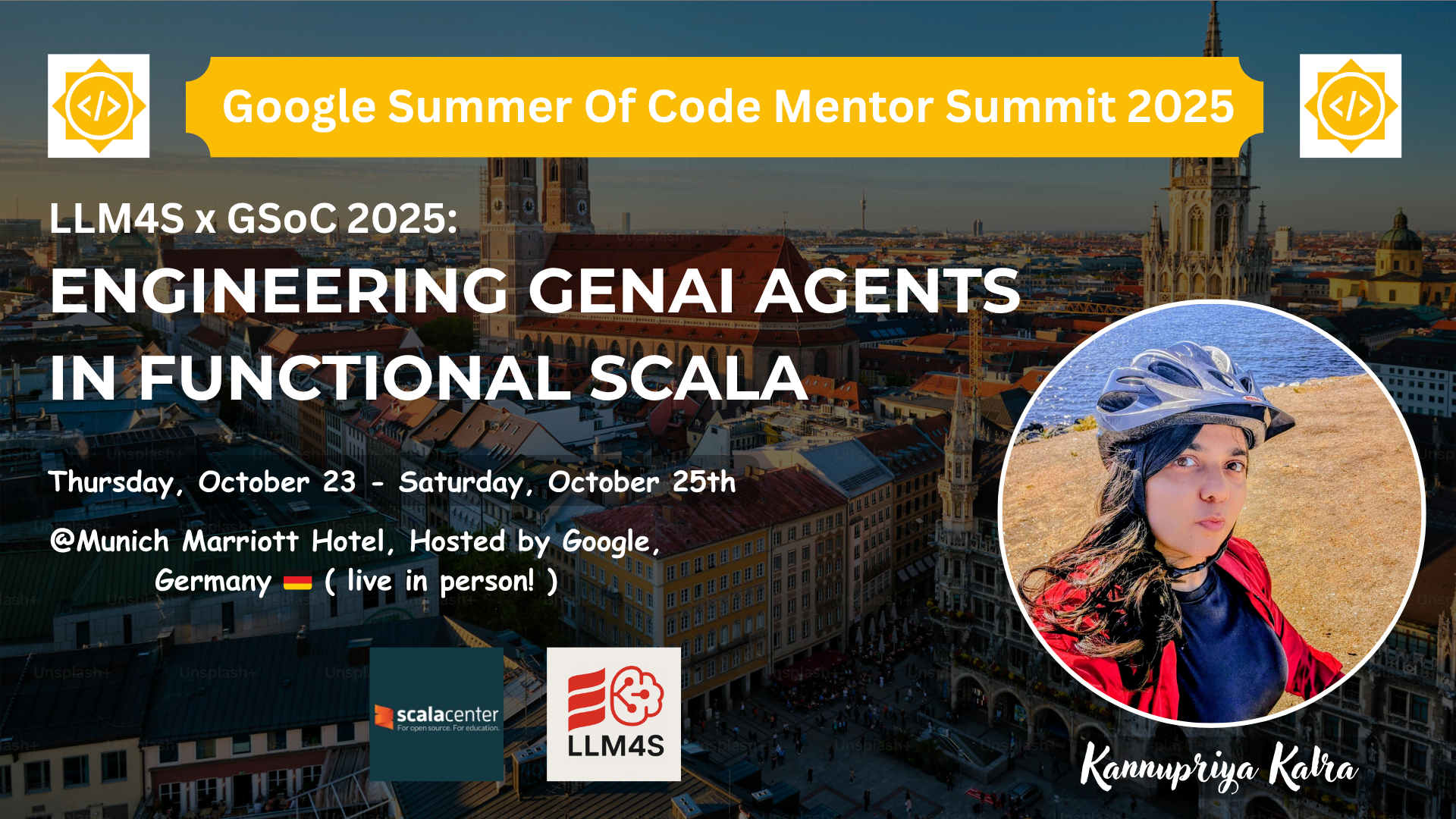 GSoC Mentor Summit 2025, Munich – LLM4S banner
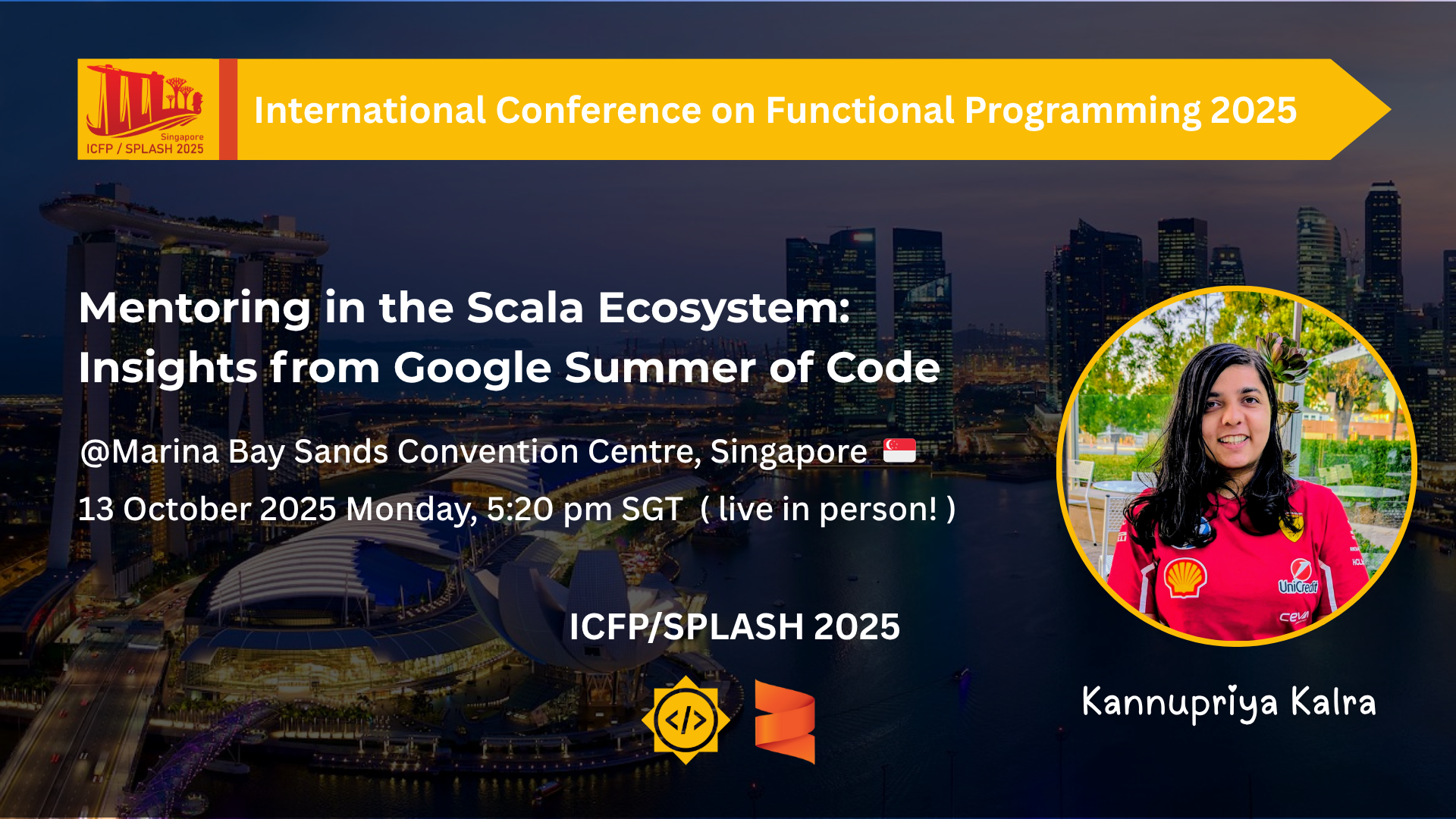 ICFP/SPLASH 2025, Singapore – Mentoring in the Scala Ecosystem
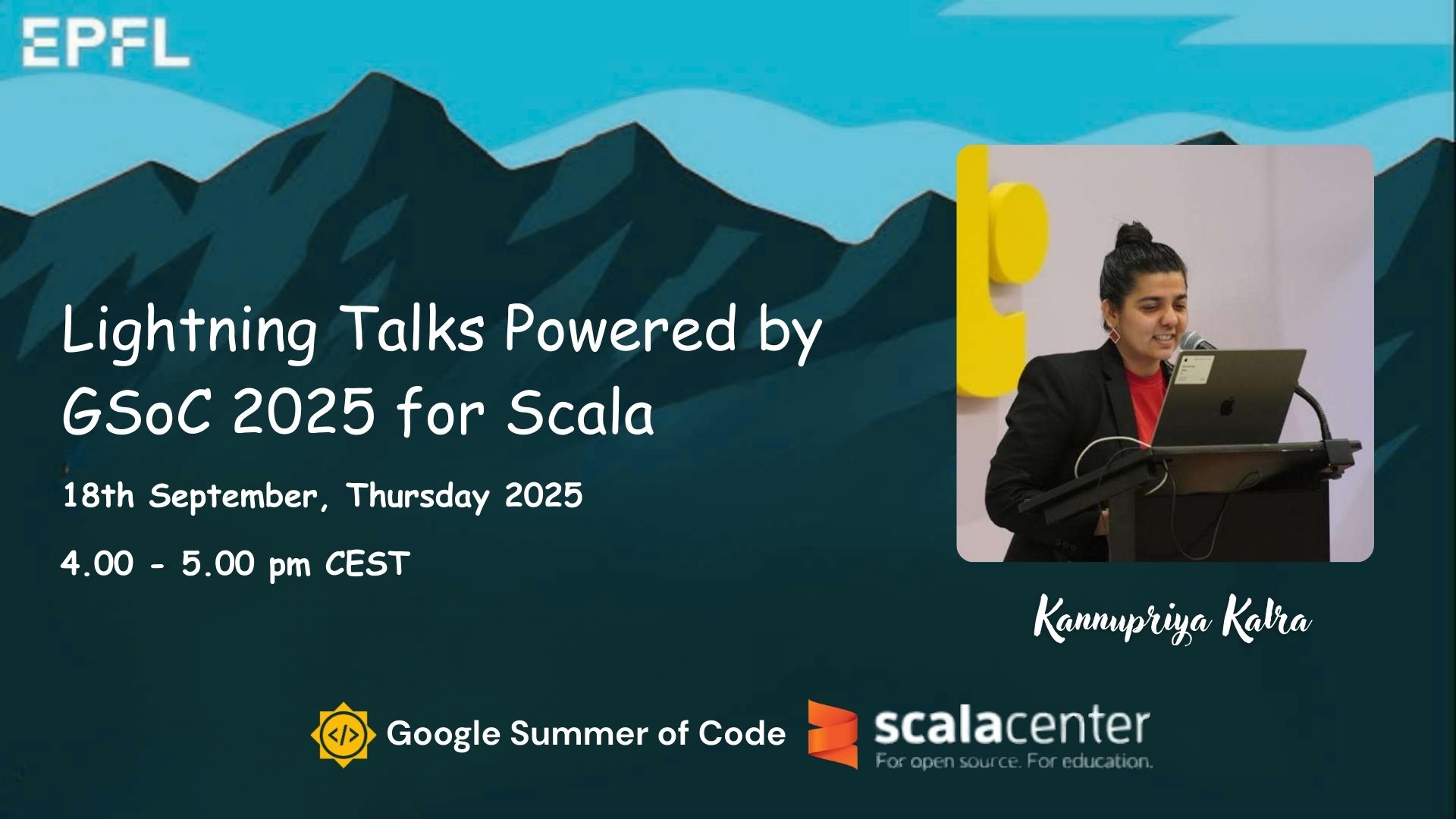 GSoC 2025 Lightning Talks, hosted by the Scala Center, Lausanne
 Zürich Scala Enthusiasts 2025 – banner
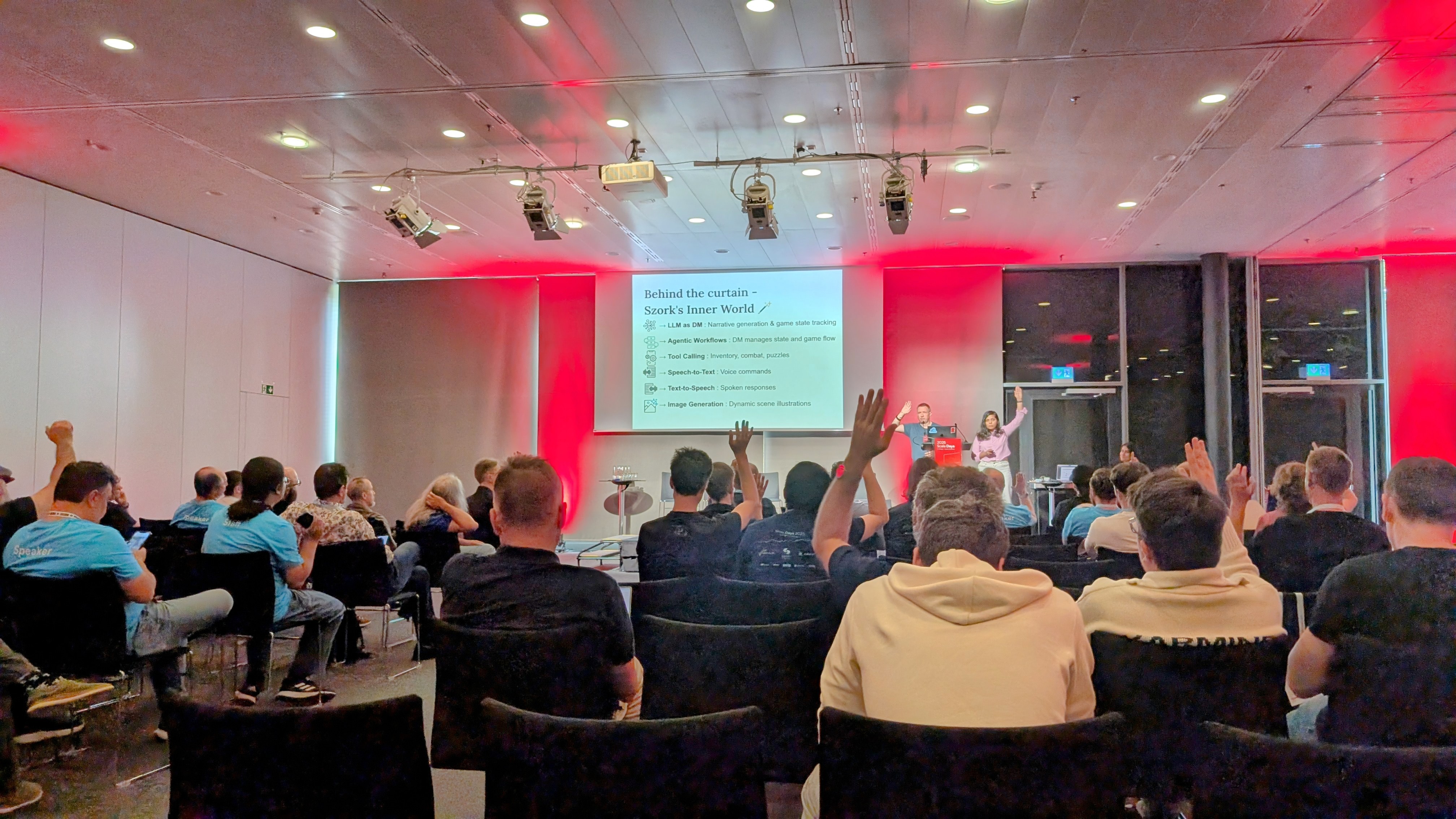 Scala Days 2025, Lausanne – Szork inner-world demo slide
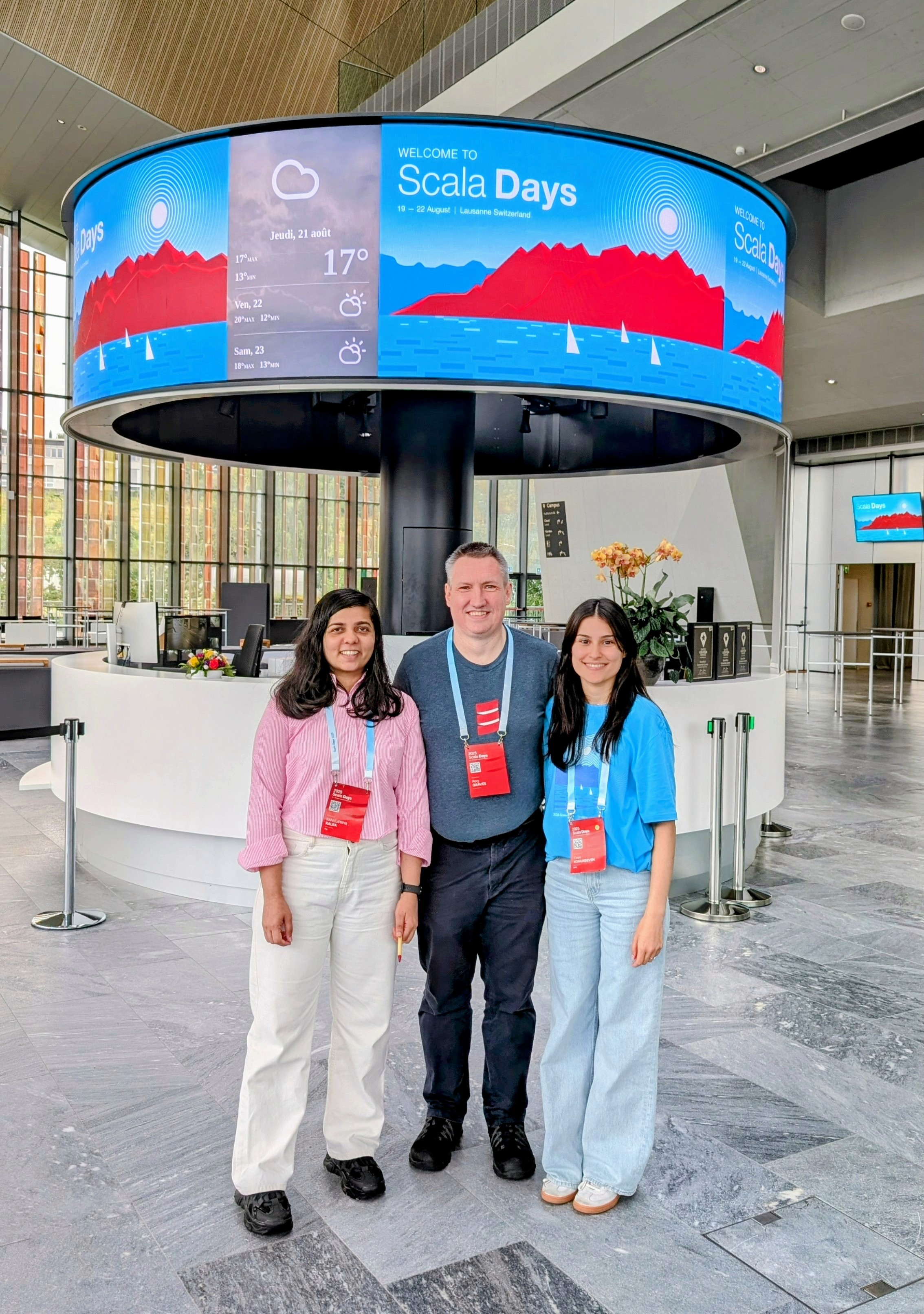 Scala Days 2025, Lausanne – the LLM4S team
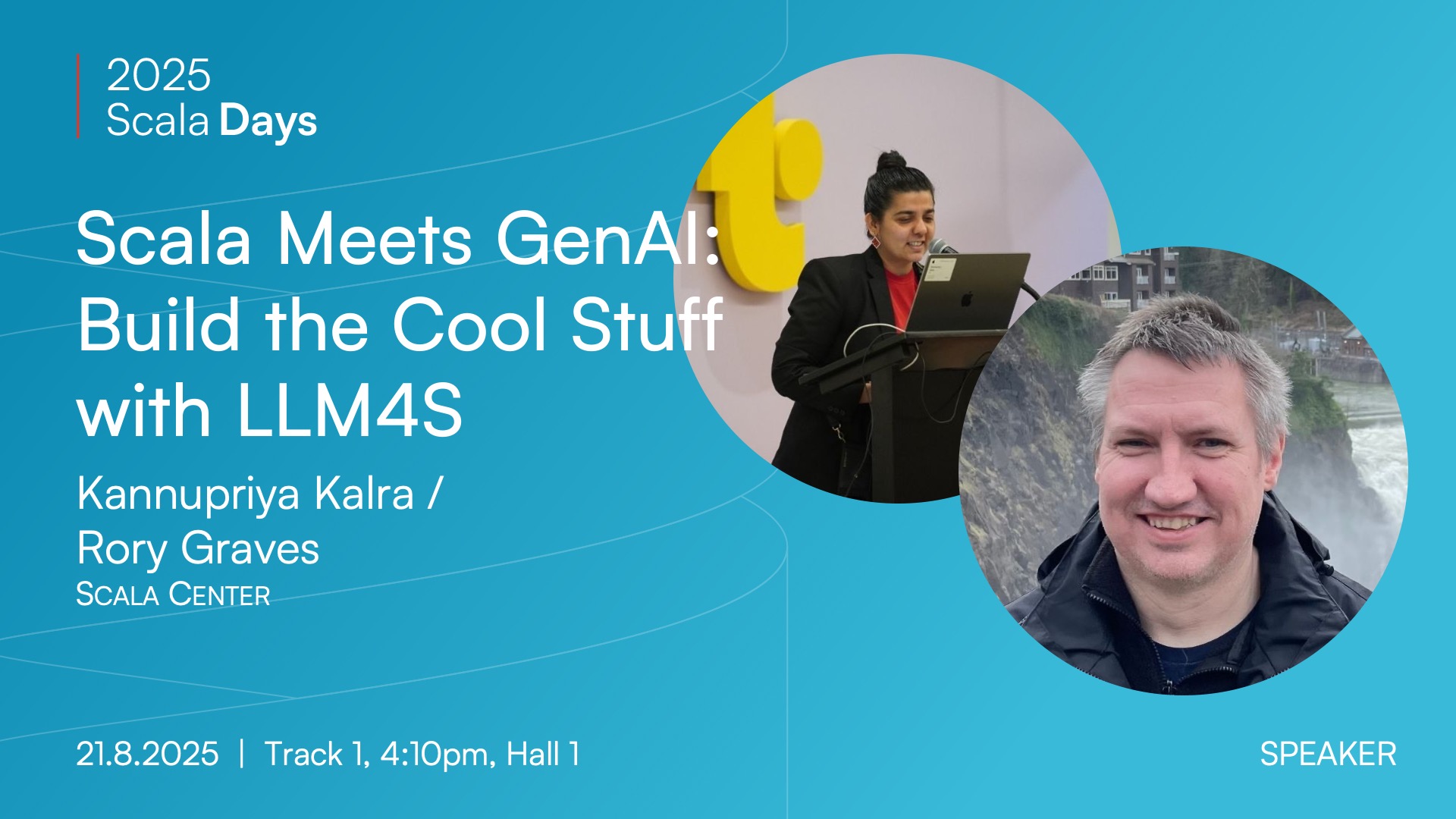 Scala Days 2025, Lausanne – official talk banner
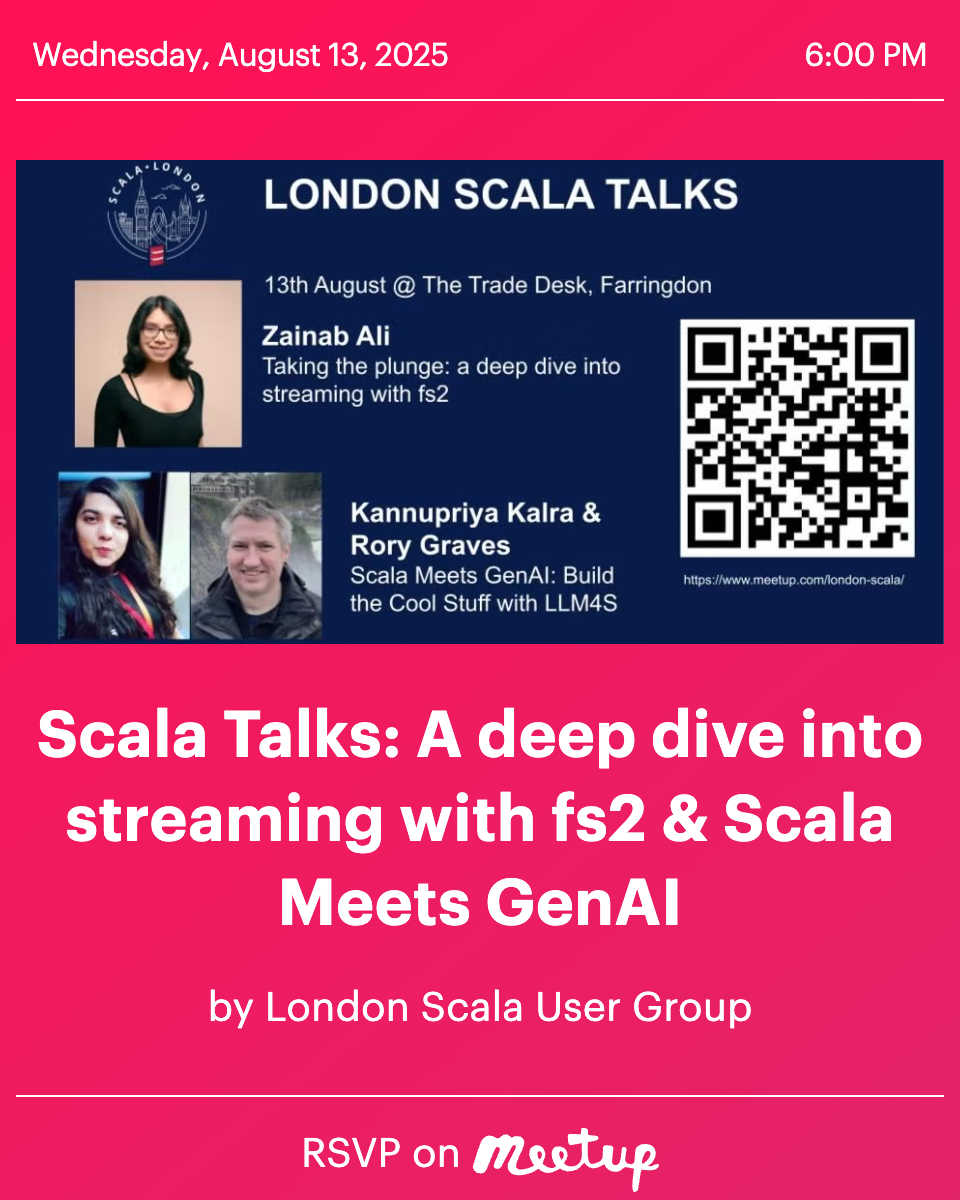 London Scala Users Group 2025 – flyer
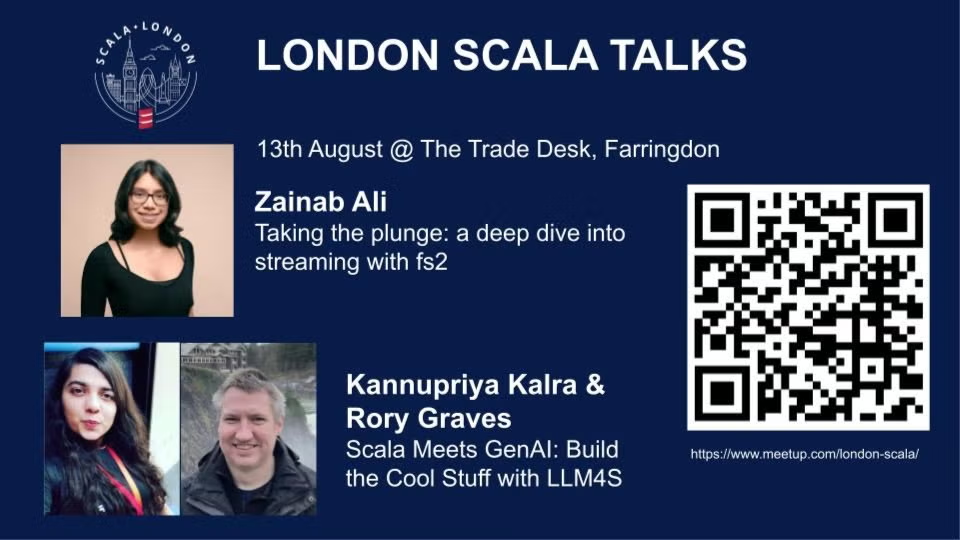 London Scala Users Group 2025 – banner
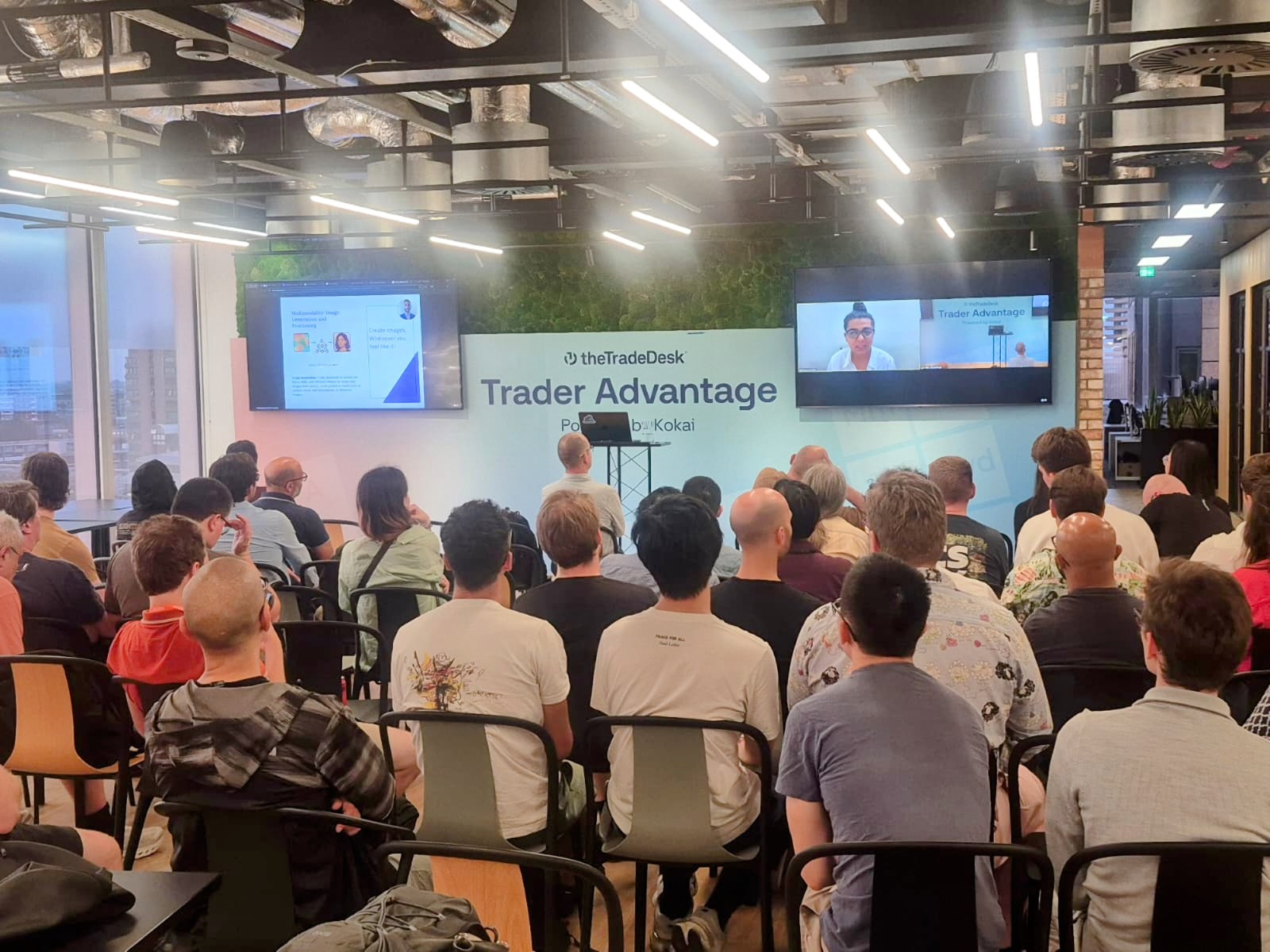 London Scala Users Group 2025 – Kannupriya Kalra's multimodal slide
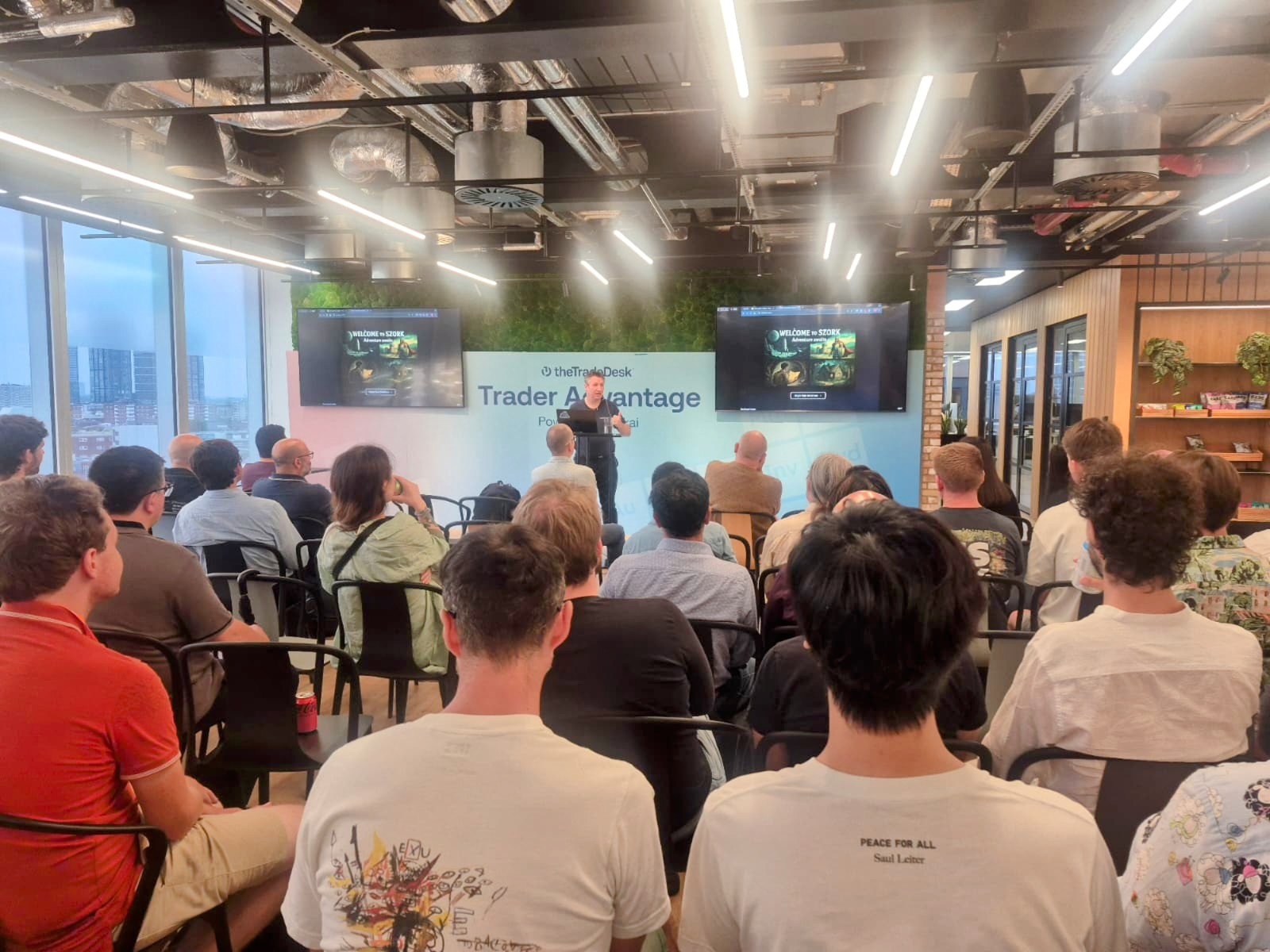 London Scala Users Group 2025 – Rory Graves's Szork demo
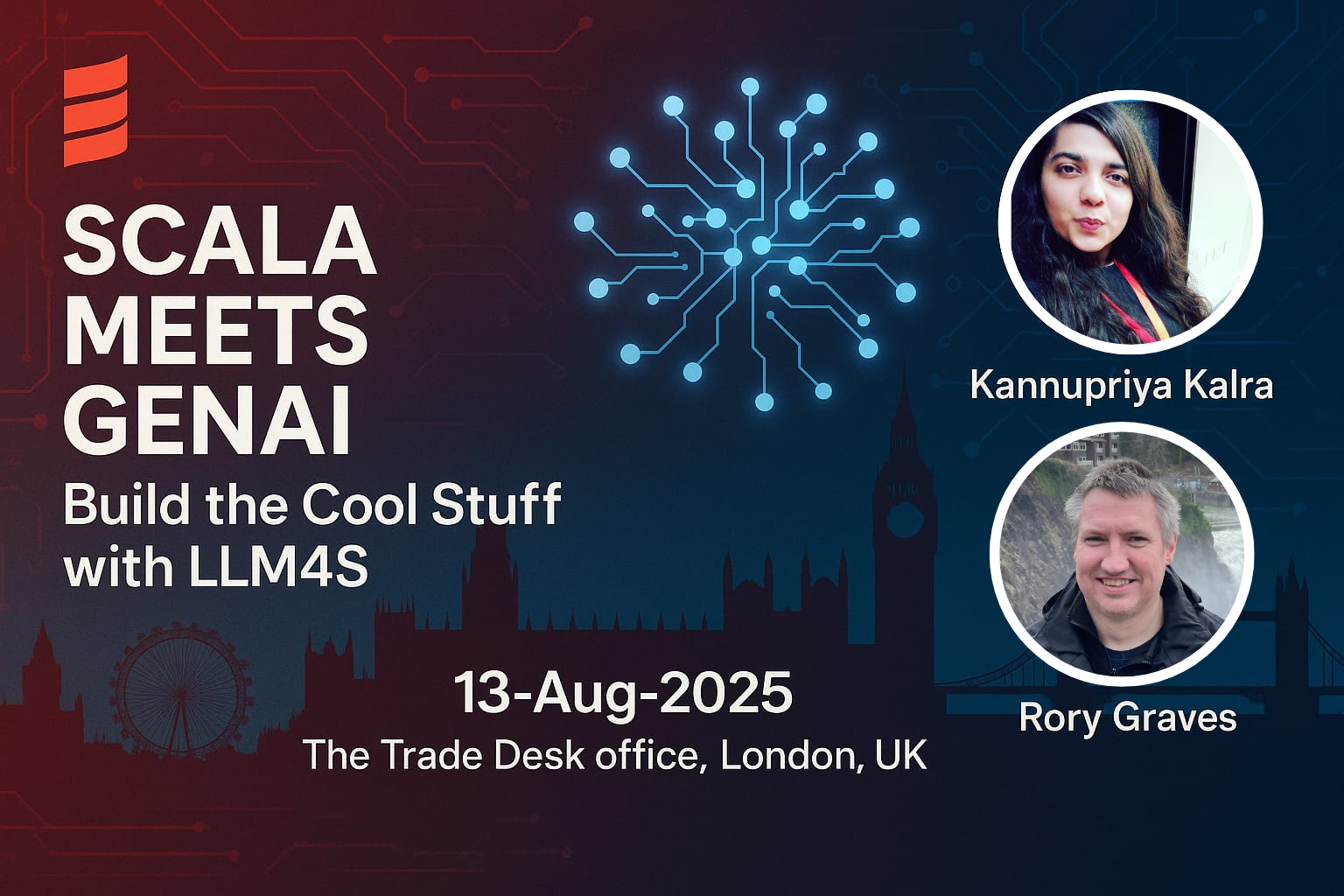 London Scala Users Group 2025 – LLM4S session banner
 Dallas Scala Enthusiasts 2025 – talk banner
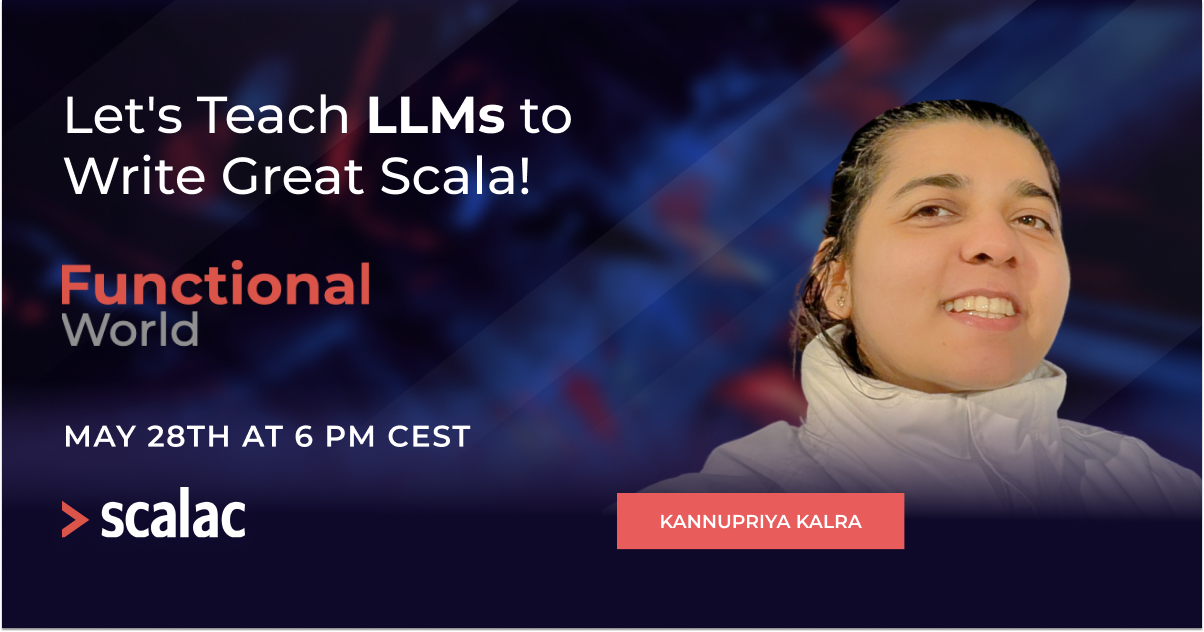 Functional World 2025 by Scalac, Gdańsk, Poland
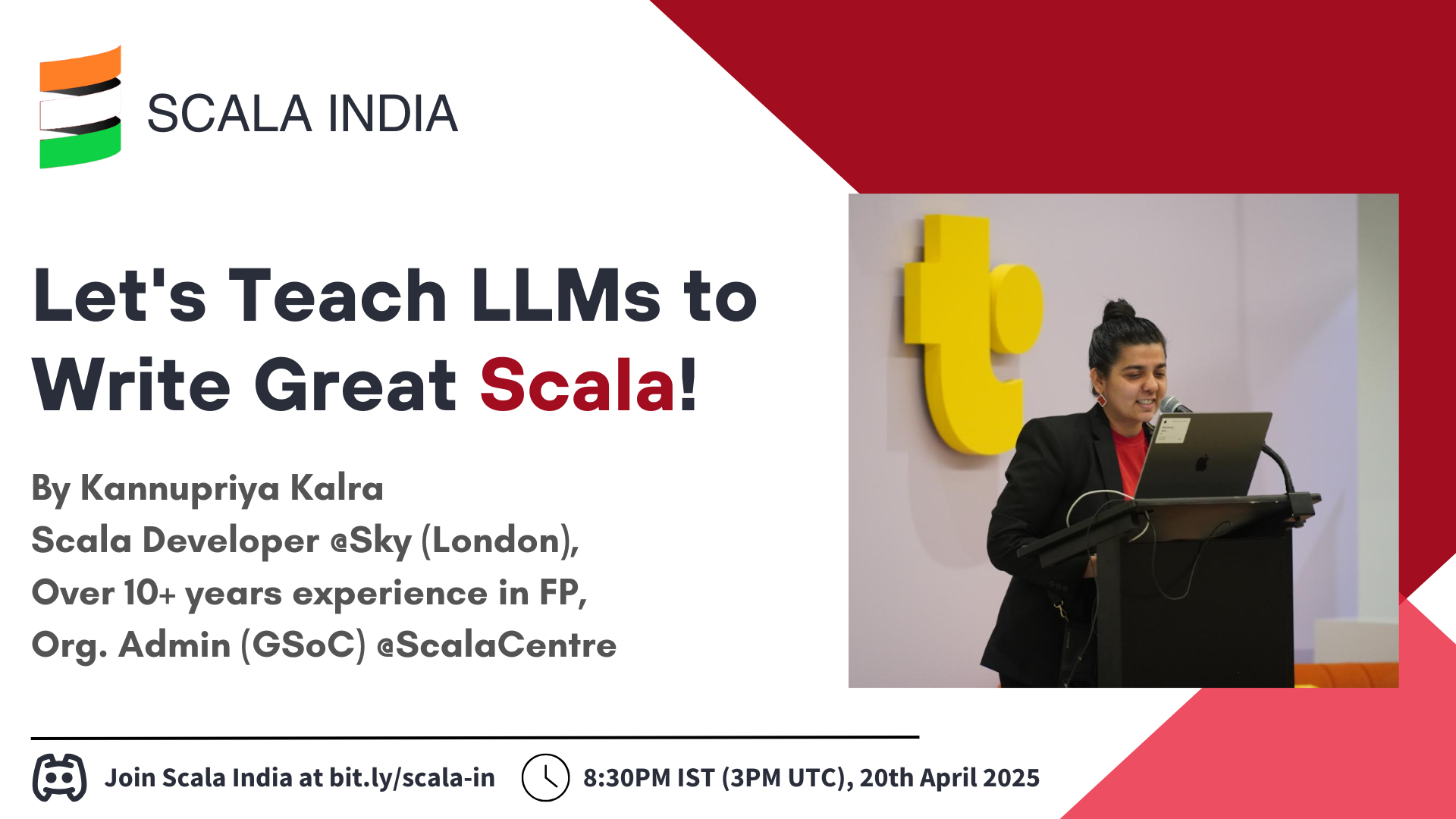 Scala India 2025 – talk banner
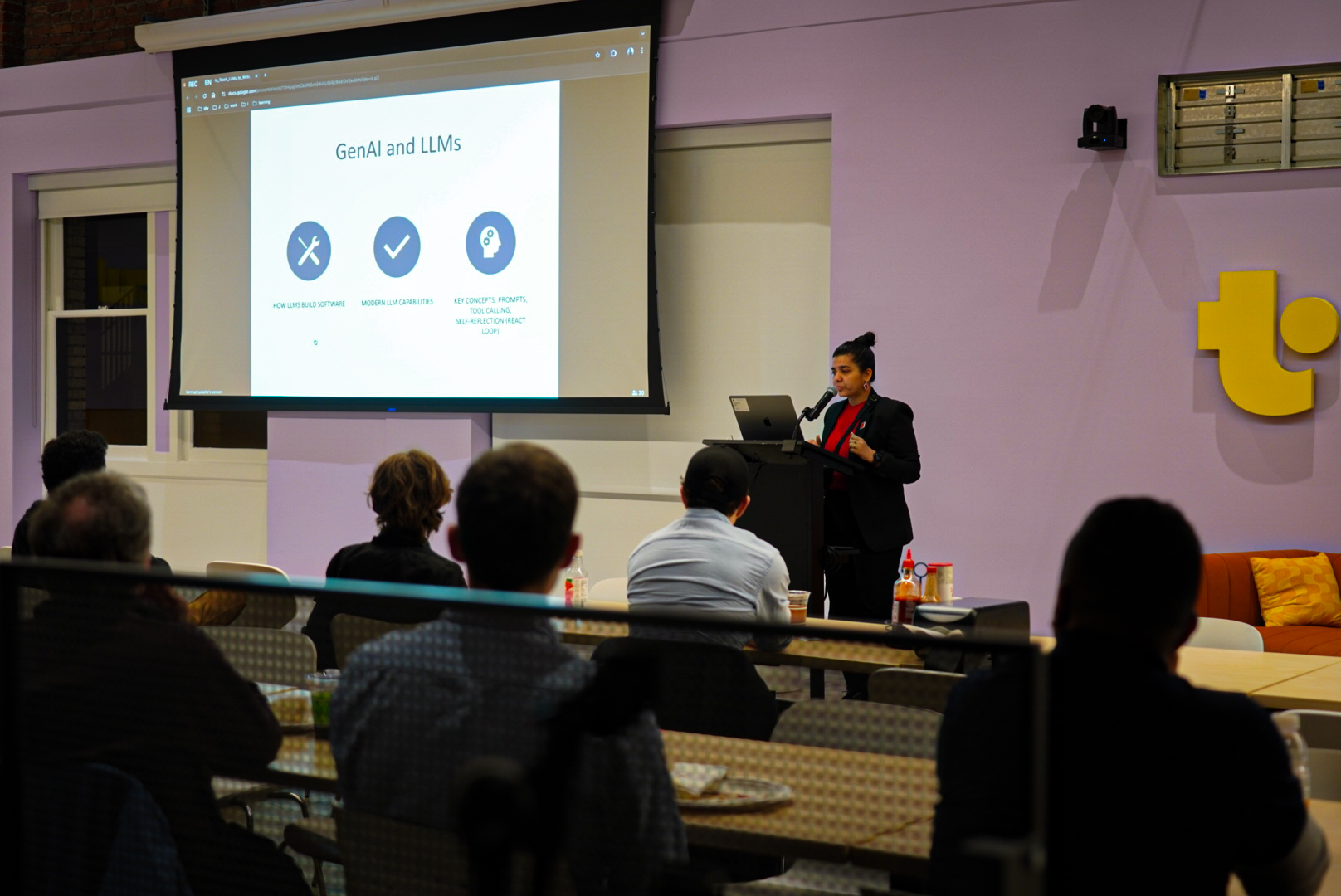 Bay Area Scala, San Francisco – generative AI slide
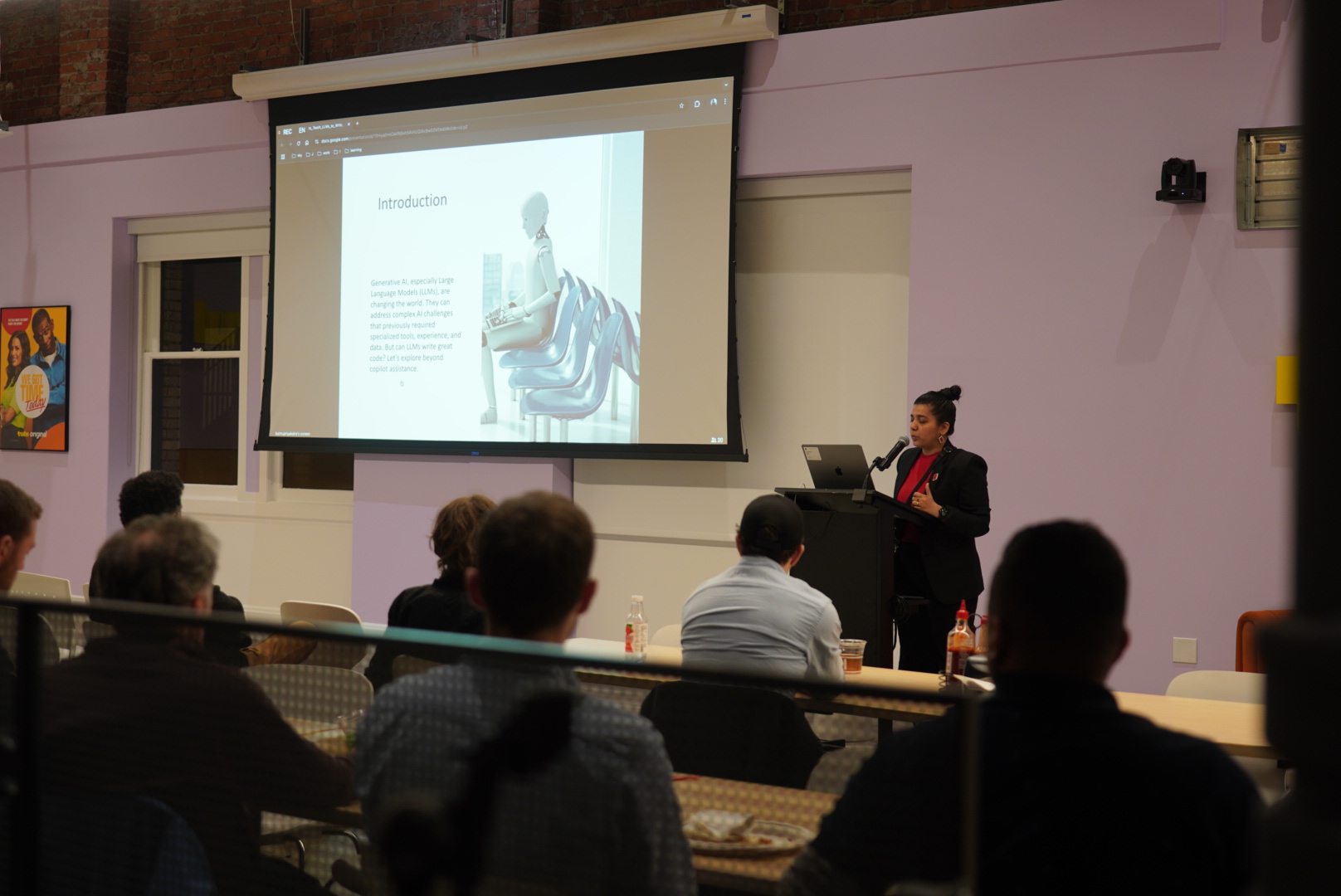 Bay Area Scala, San Francisco – introductory slide
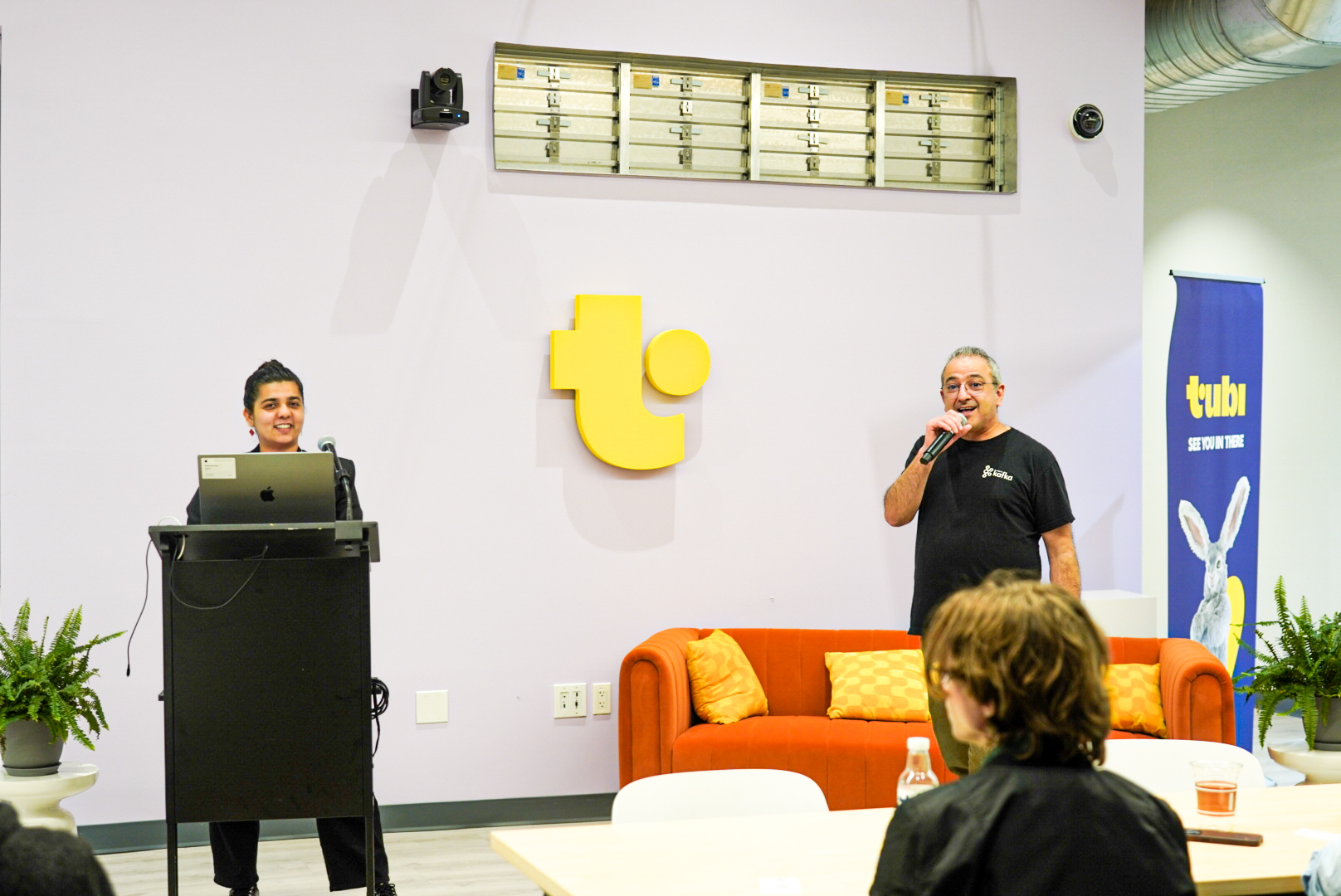 Bay Area Scala, Tubi office, San Francisco: where LLM4S was introduced
Roadmap
The road to 1.0
1.0 freezes a stable spine with a binary-compatibility promise. The date is intentionally not fixed: the frozen surface ships once it has survived two releases.
- 0.4.xArtifacts renamed to
llm4s-* - 0.5.0Modular artifacts, provider SPI, Java, Spring Boot, cats-effect and ZIO modules
- 0.5.1Multimodal messages, agent harness SPIs, Agent Skills
- Pre-1.0Designs final, MiMa compatibility baseline set
- 1.0Frozen, binary-compatible surface across 1.x
Read the roadmap What 1.0 freezes Evaluating for your organisation?
Support the foundation
Keep type-safe AI on the JVM open, maintained and free
LLM4S is community-led and maintained by a small core team, mostly in volunteer time. Your support pays for maintainer time, contributor onboarding, documentation, release engineering, CI, security hardening, the weekly Dev Hour and internships. Every contribution is handled in public through Open Collective.
- CompaniesSponsor the project your JVM services depend on, or talk to us about partnering.
- Grants and institutionsWe welcome grants and institutional support for open infrastructure.
- UniversitiesPartner with us on internships and mentored student projects.
Community
Join the community
Discord
Ask questions, share what you build and meet the maintainers.
GitHub
Star the repository, report issues and open pull requests.
Community hub
Dev Hour times in your time zone, resources and ways to help.
People
The maintainers, contributors and mentors behind LLM4S.